Thursday, April 28, 2011

Image Compression Results

Here are some more results comparing JPEG at the maximum compression level to my image compression algorithm:

Original image:


JPEG (15.7KiB):


My algorithm (3.2KiB):


Original image:


JPEG (6.3KiB):


My algorithm (2.0KiB):


Original image:


JPEG (6.2KiB):


My algorithm (3.9KiB):


Original image:


JPEG (11.2KiB):


My algorithm (2.8KiB):


Original image:


JPEG (7.1KiB):


My algorithm (3.0KiB):


Original image:


JPEG (5.9KiB):


My algorithm (1.5KiB):


Original image:


JPEG (16.4KiB):


My algorithm (4.0KiB):


All of the above images are around 1MiB when uncompressed. In every case my algorithm resulted in a smaller file size and a (arguably) better looking image.

Wednesday, April 27, 2011

Lossy Image Compression

Last night I wrote a lossy image compression algorithm. It is based on an idea from this paper. First I trained a set of 256 6x6 color filters on the CIFAR-10 image dataset. To train the filters, I used the k-means algorithm on 400,000 randomly selected image patches. Here are the resulting filters:

I then used the filters to compress the following image:

Using the maximum compression level, JPEG compresses the image to 7.1KiB:

My compression algorithm compresses the image to 5.6KiB:

Try clicking on the above images to see the high resolution versions. My compressed version of the image is smaller and looks better than JPEG.

I did the compression by doing a raster scan of the image and for each image patch I select the best filter. I then losslessly compress the filter selections using paq8l. The obvious improvement to this algorithm would be to use a combination of several filters for each image patch instead of selecting the best filter. Using several filters would take more space to encode but would result in a much better image approximation. Another idea I plan to try is to use this same algorithm for lossy video compression.

Tuesday, April 26, 2011

The Sleeping Mind

I occasionally wake up from a dream and immediately realize how flawed my logic was. Although I rarely remember any of my dreams, I have definitely woken up and thought to myself "haha, my sleeping mind must be really stupid to have come up with that conclusion." However, I have encountered a few counterexamples which indicate that my sleeping mind can be productive.

When I am falling asleep I usually spend my time thinking about some challenging problem. My theory is that if I fall asleep while thinking about a problem, my sleeping mind might churn away during the night and make progress on the problem. Although this usually isn't the case, there have been a few instances when I wake up and I have the answer.

A few years ago I was stuck on a programming problem on a cpsc313 assignment. It was late at night, I wasn't making any progress, so I went to sleep. I woke up in the middle of the night and immediately knew how to solve the question. I was so excited that I spent a few minutes implementing the solution, verified that it worked, and then went back to sleep.

Last night I went to sleep trying to think of an idea for a project to implement on Google App Engine. This morning I was surprised to find that I had a complete project idea in mind (including the algorithms needed to implement it!). I don't particularly like the idea and I don't think I will implement it, but I was shocked to find that I could come up with an original idea with non-trivial algorithmic details while I was asleep.

The idea was to develop a website for people looking for recommended places to travel. The website would first ask a series of 5-10 binary questions. The questions would provide a brief description of two travel destinations. The user would then click on the destination they would prefer travelling to. After they complete the questions a ranked list of travel recommendations would be given to the user (the list would contain many more destinations than were asked in the questions). Using some basic machine learning, the travel recommendations would become more accurate as more people use the website. The answers to the questions serve two purposes: 1) to assign the user to a cluster of like-minded individuals in order to generate a ranked destination list and 2) to rank travel destinations for all users in that cluster. Although I don't particularly like this project idea, I do like the algorithm it uses. I can imagine that this same algorithm could be used for other project ideas (although I haven't thought of any good ones yet).

Sunday, March 27, 2011

RoboCup Iran Open

Next week I was planning to travel to Iran with the UBC RoboCup team to compete in the Iran Open. After the competition I was planning on doing some travelling in Thailand. Unfortunately, the trip got cancelled. Since UBC is one of the team sponsors, they have a policy which requires that we get permission to travel to DFAIT level 3 regions. The official response was that the faculty would not give approval for the trip (due to the current threat level and the fact that the trip is not academically essential). Since we had already purchased plane tickets, the cancellation cost the team quite a bit of money. In July our team will be travelling to Turkey to compete in RoboCup 2011.

Monday, March 21, 2011

html5cards.org

Today I purchased a domain name for the HTML5 card game website Simon and I have been working on: html5cards.org

Tuesday, March 15, 2011

HTML5 Card Games

Simon and I have been making steady progress on our multiplayer card game website. The project is currently hosted at http://html5cards.appspot.com. We have implemented one game so far (German Bridge) which should be mostly functional. Let us know if you see any bugs or have feedback.

Tuesday, March 08, 2011

Face Cards

I have released a new version of my vector playing cards. It turns out the designs for the face cards are in the public domain. I compared several brands of cards and they use the exact same designs. I scanned the cards and vectorized them using potrace. After vectorizing them I did a lot of touch-up work using Inkscape.

Sunday, March 06, 2011

Today I learned...

...that I am currently travelling at the speed of light. In fact, all objects in the universe are travelling at exactly the same speed. Although I am travelling slowly in the three spatial dimensions, I am travelling quickly in the time dimension. The combined speed of any object through the four spacetime dimensions is exactly the same. Light travels completely in the three spatial dimensions and doesn't travel at all through time. Photons never age. This also explains why we can't travel faster than the speed of light.

I am quite surprised I didn't learn this fact earlier in life. I somehow managed to make it through physics and astronomy classes learning about Einstein's relativity without ever making this simple connection!

Friday, March 04, 2011

Vector Playing Cards

I have started working with Simon on a project to create a multiplayer card game website hosted by Google App Engine. For the website we need high quality images of each poker card. Ideally the images would be in a vector format so that we can scale them to any resolution. We found that there are not many options that don't have restrictive licenses (here is one exception).

Instead I decided to create a deck of vector graphics cards from scratch using Inkscape. I created most of the artwork myself except for the ace of spades:

I based this design on artwork by Suzanne Tyson. Since the source image was rasterized, I used the potrace algorithm to vectorize it.

I am releasing the images into the public domain. This means that they can be used for any purpose without any attribution (although attribution would be appreciated). I have created a Google Code project to host the SVG source code and also posted pictures of the cards to my Picasa account.

Friday, February 25, 2011

The Greatest Unsolved Problems

In 2000, the Clay Mathematics Institute published a list of seven unsolved problems in mathematics called the Millennium Prize Problems. There is a prize of US$1,000,000 for solving each problem. One of these problems has already been solved. In 1900, David Hilbert published a list of 23 unsolved problems in mathematics. Looking at the status of these problems on Wikipedia, only five of them remain unresolved.

Although there are many unsolved problems in science and mathematics, we have been making steady progress in solving open problems. Fermat's Last Theorem was conjectured in 1637 and was solved in 1995. The four color theorem was stated in 1852 and proven in 1976. Throughout human history we seem to be systematically progressing and accumulating scientific knowledge.

I have compiled a list of what I consider to be the five most important unsolved problems. Ranking the importance of problems is of course subjective. Biologists would probably be biased towards biology problems and physicists towards physics problems. I have tried to avoid being too biased towards computer science problems. Here is the list, ranked from most important to least:

1) Theory of Everything:

The Theory of Everything (TOE) is the most important unsolved problem in physics. As the name suggests, this theory would fully explain all known physical phenomena in the universe. The complexity of the universe does not necessarily mean that TOE needs to be complex. As observed in chaos theory and cellular automaton, a set of extremely simple rules can lead to incredible complexity. Albert Einstein spent the last few decades of his life searching for TOE (which he referred to as unified field theory). He failed.

Einstein's general theory of relativity explains the universe at large scales. So far, all experimental evidence confirms general relativity. Quantum mechanics explains the universe at the scale of subatomic particles. Once again, all experimental evidence confirms quantum mechanics. Unfortunately, these two theories can not both be right. In extreme conditions like black holes and the Big Bang, these theories seem to contradict each other. String theory seems to be a promising candidate for a TOE. It resolves the tension between general relativity and quantum mechanics. However, string theory has yet been unable to produce testable experimental predictions.

2) Intelligence:

There are several definitions of intelligence. When comparing the intelligence of animals, most people agree that humans are more intelligent than dogs and dogs are more intelligent than goldfish. How can we quantify intelligence? Several tests have been created that attempt to measure and compare human intelligence (such as the IQ test). Some of these tests are based directly on pattern matching and prediction skills.

Based on my research in the field of data compression, I have my own definition of intelligence which is easily quantifiable. Intelligence can be measured by the cross entropy rate of a predictive compression algorithm on multidimensional sequence data. This basically means that an algorithm which is better at predicting temporal patterns in data is more intelligent. The human brain is extremely good at recognising and predicting patterns in the massively parallel sensory data it processes.

Most data compression algorithms work on one-dimensional sequence data. For example, text is a one-dimensional sequence of characters. Studies have been performed to try to measure the cross entropy rate of humans trying to predict the next character in a natural language text sequence: 0.6 to 1.3 bits per character. The best text compression algorithms (such as PAQ8) are starting to approach the upper end of this range. Unfortunately, compressing one-dimensional data is easy compared to high-dimensional data. In my opinion, any compression algorithm which could approach the predictive capability of the human brain on billions of parallel inputs would be truly intelligent. The most promising framework I have seen for explaining the algorithm behind human intelligence is hierarchical temporal memory.

If humans are so intelligent, what is the point of making intelligent machines? Well, if we could design an algorithm which becomes more intelligent just by giving it more computational resources, we could make it arbitrarily intelligent. If it could surpass human intelligence, there could be a singularity in which the AI can design a new AI which is even more intelligent than itself (ad infinitum). Achieving this would allow AI to solve the other four open problems on this list (assuming they are solvable!).

3) Dark Energy and Dark Matter:
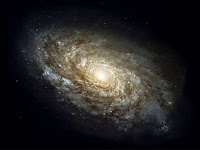
Experiments indicate that the universe is expanding at an accelerated rate. This is surprising because mass in the universe should cause gravity to slow its expansion. Dark energy is currently the most accepted theory to explain the expansion. Not much is known about dark energy besides the fact that based on its effect on expansion, about 74% of the universe is dark energy.

So if 74% of the universe is made up of dark energy, you might assume the rest of it is the visible universe. Wrong. The visible universe only accounts for about 4%. The other 22% is known as dark matter. Once again, not very much is known about dark matter. Advances in our understanding of dark energy and dark matter would provide insight into the nature of our universe and its eventual fate.

4) One-way Functions:

Any computer scientists reading this post might be surprised by the fact that the P = NP problem is not on my list. As Scott Aaronson points out, solving the P = NP problem could have a huge impact:
If P = NP, then the world would be a profoundly different place than we usually assume it to be. There would be no special value in "creative leaps," no fundamental gap between solving a problem and recognizing the solution once it's found. Everyone who could appreciate a symphony would be Mozart; everyone who could follow a step-by-step argument would be Gauss...
The problem is that most people assume that P ≠ NP. Although a proof of this would have some theoretical value, it would not have a large impact. This is why the problem got bumped off my list.

The existence of one-way functions is another famous problem in computer science. The existence (or non-existence) of one-way functions would have a bigger impact than proving that P ≠ NP. In fact, the existence of one-way functions would in itself prove that P ≠ NP. If one-way functions do not exist then secure public key cryptography is impossible. Either outcome results in a useful result.

5) Abiogenesis:

Abiogenesis is the study of the origin of life on Earth. Having little chemistry/biology background, I can't give a very good comparison between different abiogenesis theories. However, I can appreciate the importance of understanding how life arose. Not only would it enhance our knowledge of life on Earth, it would assist in the search for extra terrestrial life.

Wednesday, January 12, 2011

Machine Learning Contests

I just found another machine learning contest site called TunedIT. TunedIT seems to be very similar to Kaggle. On first inspection one of the TunedIT contests seemed to be very interesting - categorizing the genre and instruments in music. My current area of research involves one dimensional time-series data, so I thought audio would be an interesting domain to work with. Unfortunately, instead of providing the raw audio data, the contest organizers decided to process the audio and provide feature vectors instead. No longer being a one-dimensional temporal problem, the contest has lost much of its appeal.

I have been treating the traffic prediction contest on Kaggle as a one-dimensional temporal prediction problem (considering every road segment as a completely independent problem). I am currently ranked 8th out of 214 teams. I am guessing that my ranking won't improve before the contest end because I don't have any new ideas on how to increase my score. Most of my submissions so far have been used for parameter tuning. However, my parameter tuning efforts seem to have reached a local optimum.

Tuesday, January 11, 2011

Ambigram Failure

Two people who don't know my name tried to decrypt my ambigram. Their responses were "liynh knoll" and "liymr uwnq". :(

Ambigram

Today I tried to make my first ambigram:
After staring at it for several hours and making minor adjustments, I still have no idea how legible it is. I guess a good test would be to show it to someone who doesn't know my name and see if they can decipher it.

Friday, December 24, 2010

Kaggle

I recently found a great website which hosts competitions related to machine learning. I am currently competing in the freeway travel time contest and the grant proposal contest. I think Kaggle has potential to be very successful. The contest sponsors benefit by getting good solutions to tough problems at a relatively low cost. The contest participants benefit by getting access to interesting problems and the potential of winning cash prizes.

Christmas in Sri Lanka

From left to right: Nathan (dad), Archie (dog), Martha (mom), George (tortoise), Skylor (brother), Aaron (brother), Byron (me).

Friday, December 03, 2010

Al Zimmermann's Programming Contests

Over the last couple of days I have been working on a programming contest called Topswops. I am currently ranked 31 out of 312. This is the third Al Zimmermann programming contest I have competed in. The site has some very interesting optimization problems. In my first two contests I ranked 65 out of 414 and 49 out of 143.

Game Review

I noticed that somebody wrote a review about the laser game I made. The game got quite a bit of traffic when I posted a link to it on Reddit. I am pleased.

Monday, November 22, 2010

Lasers

Thanks to everyone for the useful feedback on my Laser game so far. I have added another three levels, making a total of ten. I am trying to order the levels in increasing difficulty. However, I am having trouble comparing the difficulty of levels (since I already know the solution to levels when I design them, it is hard to judge how hard it would be for someone else to solve them). It would be great if I could get some more feedback on if you encounter an earlier level which appears to be more difficult than a later level.

Thursday, November 18, 2010

Batman

[link]

Lasers

My laser reflection game now has seven levels. I have found that it is much easier to create levels for this game than it was for the art gallery problem game. I think the last two levels are quite challenging, so let me know if you manage to beat them.

Sunday, November 14, 2010

Lasers

Today I started working on a new Java game. It will be a geometry-based puzzle game. The idea is to position mirrors so that they reflect lasers to a set of targets. I have posted a prototype version here.

State of the Art

For my master's thesis I have been looking into compression-based techniques for classification, clustering, and anomaly detection. I have implemented a classification algorithm using PAQ and evaluated it on three datasets. So far the results look very promising and it seems to get state of the art results on all three datasets. The first dataset (called 20news) involves categorizing newsgroup articles into one of twenty categories. The other two datasets are spam-filtering (ling-spam and PU1). For the spam-filtering datasets a tradeoff can be made between spam/ham misclassification rates. I therefore evaluated my algorithm using ROC curves. Although my algorithm wasn't the best spam-classifier on all portions of the ROC curves, on both datasets there was still a significant portion in which it got state of the art results.

Friday, October 29, 2010

It's Alive!

After the suitcase incident, my desktop has been broken for the last six months. Earlier this week I replaced its motherboard. When I tried booting, I was disappointed to hear that it was still just beeping error codes. However, the error codes this time indicated a memory problem (which is different from the beep codes I was hearing before). I identified the damaged stick of RAM and removed it. Finally my computer seemed to boot normally, except that it unexpectedly turned off about 30 seconds later. I identified this problem to be due to the heatsink not attaching properly to the CPU. I ordered a new heatsink from Ebay and it arrived today. I just put in the new heatsink and the computer seems to be functioning normally. yay. In total, transporting my desktop in a suitcase destroyed the motherboard, one stick of RAM, and the CPU heatsink.

Sunday, October 17, 2010

Art Gallery Problem

My art gallery game now has seven levels. Designing challenging levels is surprisingly difficult. Today I implemented mirrors which reflect the guard visibility polygons (seen in the screenshot above). Hopefully mirrors will allow me to create harder levels.

Sunday, October 03, 2010

Art Gallery Problem

I was looking through Wikipedia's list of NP-complete problems to try to come up with an idea for a game. A few of the problems on the list have already been made into games. I thought the art gallery problem might make an interesting game. My research on Google suggests that it has never been adapted into a game before. I spent the day implementing the game and have posted it online here. So far I have only made four levels but I plan on adding more soon.

Thursday, September 30, 2010

Google Offer

I just accepted a job offer from Google! The position is Software Engineer. After I finish my master's degree, I will be moving to Mountain View, California.

Monday, September 27, 2010

ACM Eligibility

During the last two weekends I competed in tryouts to be part of the UBC programming team. I did well enough to qualify for the first team. However, yesterday I noticed on the 2010 ACM eligibility chart that I am ineligible because I am slightly too old (by four months). We tried emailing the ICPC manager but she verified that I can not compete :(

Sunday, September 26, 2010

Wednesday, August 18, 2010

Sri Lanka

Last week I finished my internship at Google. I have been in Sri Lanka for about a day now. Cathay Pacific managed to lose both of my suitcases on the way here. So far I like Sri Lanka. It seems to be similar to India except better in a number of ways.

Thursday, August 12, 2010

Homework

Translation courtesy of reddit user thelifan:

My life here is terrible. Work environment is not great and benefits are little. But don't worry, everyday only about 10 people are seriously injured and I'm very careful. We opened a small shop, business isn't bad. Although I don't understand very much English, but I can still understand what white men say. Hopefully we can become successful, I will work hard and take care of myself.

Are you guys well? Miss you very much, hope to see you again.

Saturday, August 07, 2010

Skydiving!

This morning I went skydiving from 15,000 feet. It was an incredible experience. The free-fall lasted for about one minute and parachuting lasted five minutes. The "falling" sensation only lasted for a few seconds after leaving the plane. Once reaching terminal velocity, the free-fall was quite comfortable (and surreal). My instructor let me control the parachute for part of the descent. We also performed a fun maneuver spinning the parachute around in a tight spiral. A few years ago I went bungee jumping. I think making the jump was probably scarier for bungee jumping than skydiving. However, I enjoyed everything about skydiving a lot more than bungee jumping.

Wednesday, July 28, 2010

Skydiving!

Next week I am planning to go skydiving with some Google interns. Should be fun!

Sunday, July 25, 2010

YouTube Easter Egg

For YouTube videos with the new layout style, performing the following steps will start up a game of Snake:

1) Click on the video to give it keyboard focus
2) Hold the left arrow key

Here is a YouTube video that it will work on. Discovered via Reddit.

Sunday, July 11, 2010

Demon's Souls

Today I finally beat Demon's Souls. I am pretty proud of this accomplishment given how ridiculously hard the game is. It is the best PS3 game I have played.

Tuesday, June 22, 2010

RoboCup 2010

I am currently in Singapore attending RoboCup 2010. UBC Thunderbots is competing in the small size league. We played four games and did not advance to the semi-finals. We lost three games and won one game. The Thunderbots website has lots of pictures, videos, and a blog. I will be in Singapore for one week.

Thursday, May 20, 2010

TopCoder Open

Today I discovered that TopCoder is hosting an interesting marathon match over the next month. The problem is pretty simple:

Input: list of edges
Output: vertex locations
Goal: minimize number of edge intersections

There is an online scoreboard which shows your ranking after each submission. I was in last place after my first submission. My second submission was quite an improvement and put me in second place =)

Monday, May 17, 2010

siarco

I just released an open source version of the arithmetic coder I discussed in my previous post. The project is hosted at http://code.google.com/p/siarco/.

Sunday, May 16, 2010

Nice Weather

[link]

Arithmetic Coding

This week I wrote a program to perform arithmetic coding. Arithmetic coding is useful for data compression. This summer I plan to release an open source lossless data compression algorithm which uses the coder.

The program to do the arithmetic coding is only around 150 lines of Java code. For a while I had a really annoying bug related to precision errors with floating point numbers. The vast majority of the time I spent developing the program was trying to fix this bug. Today I finally figured out a great solution to the precision problem which has almost no computational overhead and is theoretically guaranteed to always be correct.

Wikipedia claims "every programmatic implementation of arithmetic encoding has a different compression ratio and performance." I find this statement surprising because I think I can construct a proof showing that my program encodes the input with exactly the minimal number of bits. If the number of bits is not divisible by 8, my program uses a few extra bits in order to store the resulting bytes to disk. As far as I know it is impossible for another arithmetic coder to achieve a better compression ratio. I tried testing the program on several files and it achieved a compression ratio extremely close to the theoretical cross entropy limit.

In terms of performance my algorithm also has nice properties. The time and space complexity are both linear in terms of the number of input characters (which is optimal). The code only performs basic arithmetic operations on primitive data types, so it should also be very efficient. The code works with any input alphabet size. I plan to convert the program to optimized C code and compare its performance to other arithmetic coders. Since I am already confident that its compression ratio can not be beaten, if it turns out to be faster than other arithmetic coders as well, then my algorithm could be an important contribution =)

Sunday, May 09, 2010

Googleplex

I really enjoyed my first week at Google. So far I have mostly been doing training. The food at the Googleplex is amazing. I will be eating breakfast, lunch, and dinner there, so I will only have to cook for myself on weekends. I have been trying to go to a different café for every meal. My apartment is about a 30 minute bike ride from the campus, so that exercise might help counteract the abundance of free food. Google gave me a nice bike to use over the summer.

Yesterday I bought a new monitor so that I can play my PS3. I also bought a game called Demon's Souls. I tried getting Demon's Souls at three different places in Vancouver but they were all sold out. In Mountain View I tried checking Best Buy and Toys Я Us but they were also sold out. Finally, I found a copy at Game Stop (which turned out to be their last copy). The ridiculous thing is that this game was released over half a year ago. The gameplay is incredibly addicting (and incredibly difficult). It is the best PS3 game I have played.

Suitcase Computer

I recently discovered that traveling with a desktop computer in a suitcase is a bad idea. When I was packing for my trip to Mountain View I spontaneously decided to bring my desktop computer since I had lots of extra room in my suitcases. I have traveled with a desktop computer before without any problems.

The first annoyance was that both my suitcases were way over the weight limit, so I was charged expensive overweight fees. I would have been under the weight limit without the computer. When I arrived in Mountain View and started unpacking the computer, I noticed a horrible rattling sound when I moved it. A rattling sound indicating loose components in the case.

The CPU heatsink had somehow become detached and was bouncing around inside the case the entire trip. Today I bought some thermal grease and reattached the heatsink. When I tried to boot the computer it started making beeping sounds and immediately shutdown. It is most likely the motherboard which was damaged. I wish I had just left the computer in Vancouver.

Saturday, April 10, 2010

Imagine Cup

Surprisingly, we advanced to round 2 of Imagine Cup. Here is the demo we submitted. 150 teams out of 700 advanced. Only 6 teams advance to the finals. We are debating whether finishing the game is worth the time investment given we have such a low probability of making it to the finals :D